
Post
13 Minimalist Wall Clock
May
The Art of Subtraction: Why a Minimalist Wall Clock Belongs in Every Modern Home
https://en.wikipedia.org/wiki/Clock
In a world that constantly demands our attention, there is something profoundly liberating about surrounding ourselves with objects that do not. The Minimalist Wall Clock, quietly ticking on your wall, asks nothing of you except to glance its way when you need to know the hour. It does not clamor for your gaze, does not overwhelm your senses with unnecessary ornamentation, and does not compete with the carefully curated aesthetic of your living space. Instead, it exists in elegant harmony with its surroundings—a study in the beauty of restraint.
This is the essence of minimalist design, and it is exactly what makes the Minimalist Wall Clock such a compelling addition to contemporary interiors. At $34.99, it represents an accessible entry point into a design philosophy that has transformed how we think about living spaces across Scandinavia, Japan, and modern homes worldwide.
The Quiet Revolution of Minimalism
Minimalism is not merely an aesthetic choice; it is a response to the visual noise that characterizes much of our daily existence. When we strip away the extraneous, we create room for what truly matters. This philosophy, which emerged from Japanese design traditions and Nordic functionalism, has found renewed resonance in an age of constant stimulation. The Minimalist Wall Clock embodies this philosophy in its purest form—reminding us that a single, well-designed object can carry more meaning and beauty than several competing elements ever could.
Consider the walls of most homes. Often, they become galleries of accumulated items: decorative plates, family photographs, art prints, and of course, clocks. Each piece tells a story, but together, they can create a sense of visual competition that paradoxically diminishes the impact of everything on display. A minimalist approach does not mean emptiness; it means intentionality. It means selecting pieces that serve their purpose with grace and beauty, allowing each object to breathe and contribute meaningfully to the whole. Minimalist Wall Clock
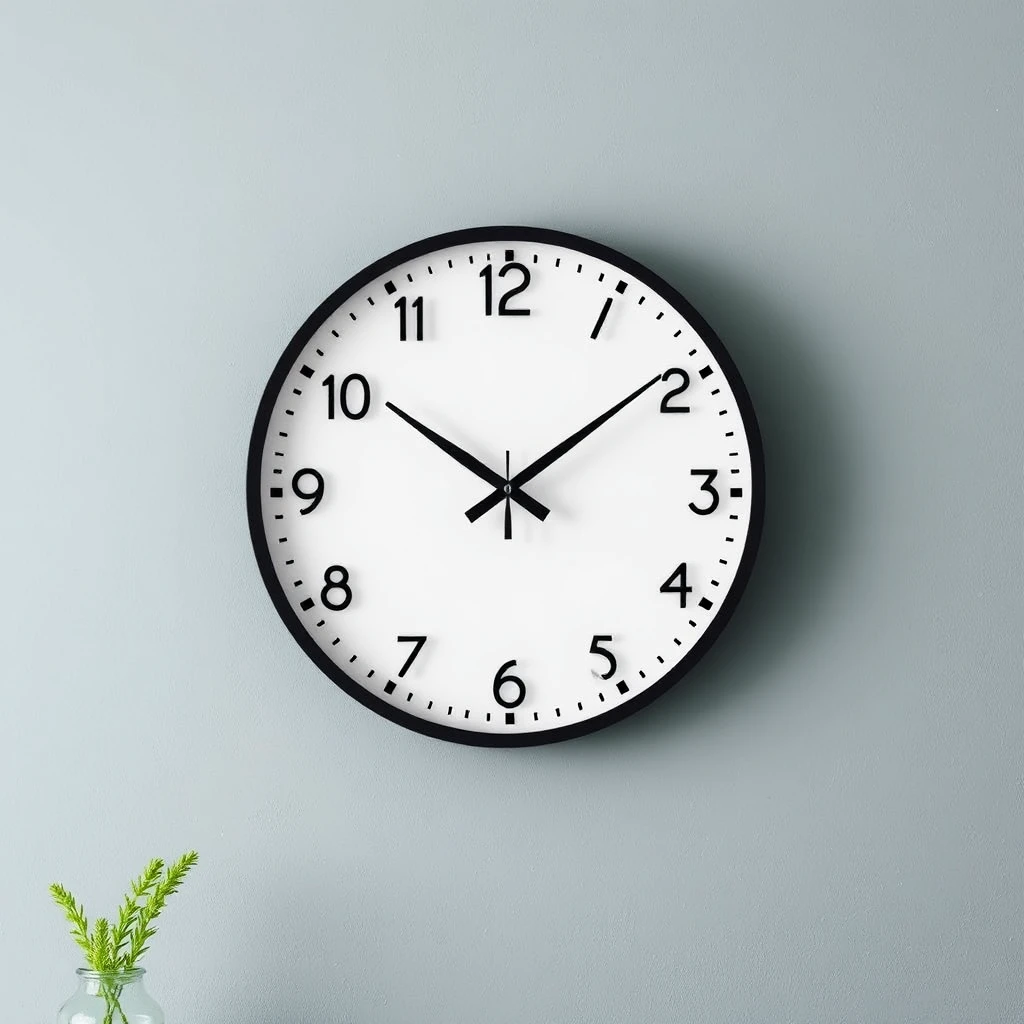
The clean lines of this wall clock exemplify this philosophy. There are no superfluous decorations, no extraneous hands or complications, no gimmicks or trendy embellishments that will look dated in a few years. Instead, there is simply a circle, clearly defined numerals, and hands that move with silent purpose across the face. This is design that trusts its own conviction, that knows exactly what it wants to be and commits fully to that vision.
Where Function Meets Beauty
One of the most frustrating aspects of many design-focused items is the sacrifice of function for form. A beautiful clock that is difficult to read defeats its fundamental purpose. The Minimalist Wall Clock solves this dilemma entirely through thoughtful design that places equal emphasis on aesthetics and usability. Minimalist Wall Clock
The large, easy-to-read numerals ensure that you can tell the time from across the room without squinting or leaning closer. This might seem like a basic requirement for any clock, but countless design clocks sacrifice readability for visual impact, leaving homeowners frustrated when they cannot quickly determine whether they have time for one more cup of coffee before leaving for work. Here, form and function exist in perfect balance—the numerals are not merely decorative but genuinely useful, their size and spacing carefully considered to maximize clarity without disrupting the clock’s elegant proportions.
Beneath this handsome exterior beats the heart of precision: Japanese quartz movement. This is not an afterthought or a cost-cutting measure but a deliberate choice that reflects the clock’s commitment to accuracy and reliability. Japanese movement is renowned in the clockmaking world for its exceptional quality and longevity, providing the silent, smooth sweep that many homeowners prefer over the clicking motion of lesser mechanisms. This silent operation means the clock will not disturb your sleep in the bedroom or distract you during quiet moments in the living room. It simply does its job, unobtrusively and faithfully.
A Design Without Boundaries
One of the most remarkable qualities of the Minimalist Wall Clock is its remarkable versatility. While many clocks commit themselves to a specific aesthetic that limits where they can be placed, this clock possesses a chameleon-like quality that allows it to enhance virtually any room in your home.
In a Scandinavian-inspired living room, where light woods, neutral textiles, and organic textures create an atmosphere of warm simplicity, the clock contributes to the layered minimalism that defines this style. Its clean face echoes the geometric patterns found in Nordic textiles, while its materials and finishes complement the natural elements that characterize the aesthetic. The clock does not compete with the soft grays and warm whites that dominate these spaces but rather provides a subtle anchor around which the room’s other elements can gather.
In Japandi interiors—a design trend that merges Japanese and Scandinavian sensibilities—the clock finds perhaps its most natural home. This hybrid aesthetic emphasizes craftsmanship, natural materials, and a restrained color palette, all of which the Minimalist Wall Clock embodies. The quiet sophistication that defines Japandi design finds expression in the clock’s unpretentious beauty, its refusal to boast or demand attention, and its ability to create visual calm while remaining deeply functional.
Contemporary spaces, with their bold architectural elements and mix of textures and materials, benefit from the clock’s ability to serve as a visual rest point. In a room filled with statement furniture and artistic Minimalist Wall Clock flourishes, the clock provides a moment of clarity—a simple object that grounds the eye and provides a sense of order among the visual richness. The clock becomes not just a timepiece but a design element that helps balance the composition of the room.
The Living Room Anchor
The living room often serves as the heart of the home, a space where family gathers, guests are entertained, and much of daily life unfolds. This multi-purpose nature makes it simultaneously one of the most important and most challenging rooms to design. The Minimalist Wall Clock offers a solution to one of the living room’s most persistent design challenges: what to place above the sofa or on the feature wall.
Wall art can be deeply personal and often reflects a specific taste that not all household members share. Gallery walls require significant commitment and can feel overwhelming in smaller spaces. But a minimalist clock transcends personal taste while remaining universally appealing. It provides visual interest without dominating the conversation, adds functionality to a space where checking the time is genuinely useful, and creates a balanced composition that works whether your sofa is leather or fabric, modern or traditional.
The large display ensures that the clock makes a proportional statement above furniture pieces of various scales. Where smaller clocks can look lost above a substantial sofa or fireplace, this clock’s generous numeral size and overall presence ensure it holds its own as a significant design element without becoming overwhelming.
The Kitchen Companion
Kitchens present unique challenges for timepieces. This is a space that demands practical design—surfaces must be easy to clean, materials must withstand heat and moisture, and every object must earn its place through genuine usefulness. The Minimalist Wall Clock meets these requirements while adding a design element that transforms the kitchen from purely functional to genuinely beautiful.
The premium materials used in its construction ensure durability in an environment that can be demanding. Unlike clocks with cheap plastic components that yellow over time or peel with exposure to cooking residues, this clock is built to maintain its beauty through years of daily use. The silent movement is particularly valuable in the kitchen, where the soft tick of a traditional clock can become irritating during quiet morning coffee hours or late-night cooking sessions.
For open-concept living spaces where the kitchen flows into living and dining areas, the clock provides a visual bridge between zones. It signals the passage of time as you move through your day, from morning coffee to evening meals, marking the rhythms of domestic life with quiet reliability. Minimalist Wall Clock
The Bedroom Sanctuary
The bedroom should be a retreat from the world’s demands, a space that promotes rest and renewal. Even here, a clock serves a purpose—whether you need to wake for work, track medication schedules, or simply understand why darkness came so early in winter. But the wrong clock can undermine the sanctuary you’re trying to create.
A clock with a loud ticking mechanism, glaring numerals, or an aesthetic that feels cold or clinical can disrupt the peaceful atmosphere you work to cultivate in your bedroom. The Minimalist Wall Clock solves these problems through its silent sweep movement and restrained design. The numerals are large enough to be useful but not so bright or attention-grabbing that they disturb your rest. The design itself contributes to the sense of calm that defines a well-designed bedroom, its simple beauty harmonizing with soft textiles, comfortable bedding, and gentle lighting. Minimalist Wall Clock
The Office Professional
Home offices have become essential spaces for many people, and like any room in the house, they benefit from thoughtful design choices. A clock in the office might seem like a simple practical addition, but it contributes to the professional atmosphere you want to cultivate while working from home. The Minimalist Wall Clock does this without the cartoon characters or casual aesthetics that characterize many office-appropriate clocks.
Its presence serves as a subtle reminder of the structure that effective remote work requires—meetings to attend, deadlines to meet, the passage of time that keeps us accountable to our schedules. But it does so with a design sophistication that respects the intelligence of the space and its inhabitants. The clock becomes part of a carefully curated environment that supports focus and productivity. Minimalist Wall Clock
The Investment in Timelessness inimalist Wall Clock
At $34.99, the Minimalist Wall Clock represents remarkable value for a piece of design that will serve your home for years to come. This is not a purchase you will need to replace as trends change or materials degrade. The quality of the Japanese movement, the durability of the premium materials, and the timeless nature of minimalist design combine to create a timepiece that transcends the disposable nature of so many home accessories.
Think of it not as an expense but as an investment in the daily experience of your home. Every time you glance at the wall to check the time, you will be rewarded with the quiet satisfaction of beautiful design executed with intention and care. That might seem like a small thing, but the accumulation of small daily pleasures is what makes a house into a home.
In the end, the Minimalist Wall Clock asks very little of you. It asks only for a place on your wall, a glance now and then, and the occasional replacement of a battery. In return, it offers something rarer than mere functionality: the daily reminder that beauty need not be complicated, that elegance need not be expensive, and that sometimes the most profound design statements come from knowing exactly what to leave out. Minimalist Wall Clock
https://mapstory.click/category/post
